Master Classes (NLP, CBT, Leadership)
CBT Techniques for Negative Thoughts: A Practical Self-Help Guide

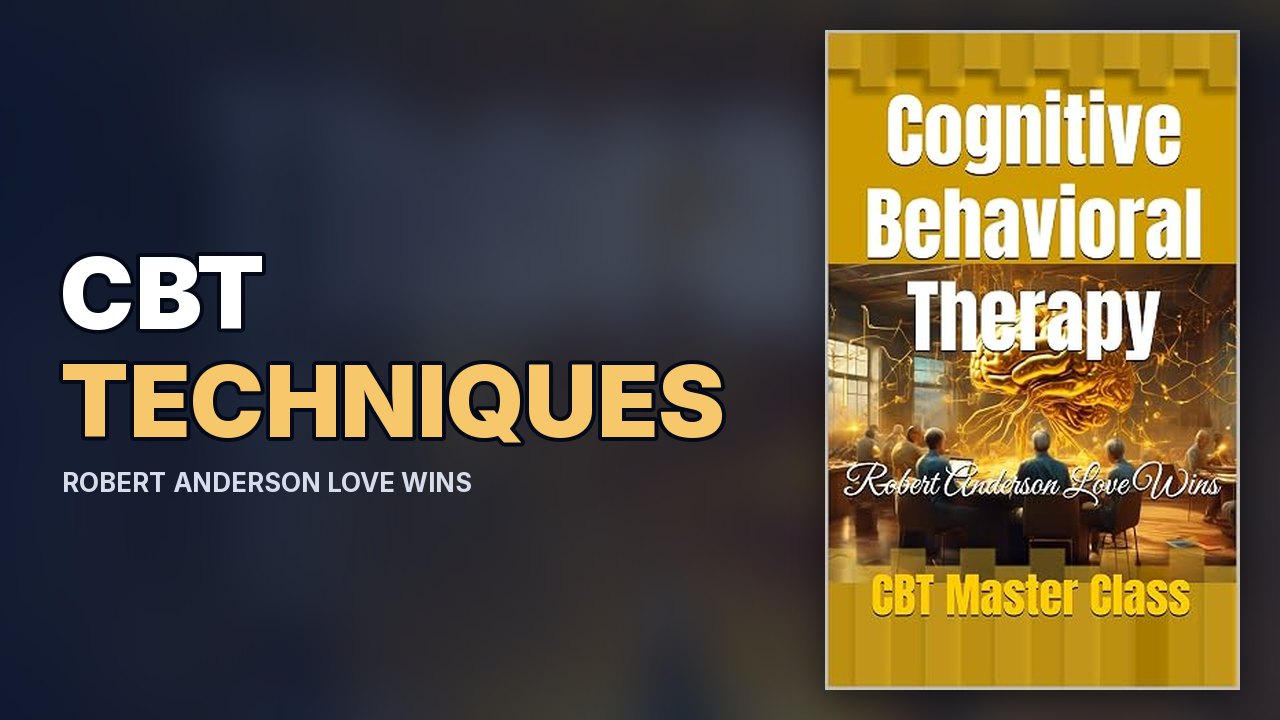 0:37Book video · 0:37▶ Watch the promotional videoCognitive Behavioral Therapy: a short look at the book, from its Amazon description.
Many people quietly wonder about CBT techniques for negative thoughts without knowing where to begin. This article offers a clear starting point: what the subject really involves, practical ideas you can try this week, and where Robert Anderson Love Wins goes deeper in his book Cognitive Behavioral Therapy.
Cognitive distortions to recognize
Cognitive behavioral therapy (CBT) teaches that thoughts, feelings and behaviors influence each other. A common starting point is spotting cognitive distortions: all-or-nothing thinking, catastrophizing, mind reading, overgeneralizing and labeling. Once you can name the pattern, it loses some of its power.
Thought records and cognitive restructuring
A thought record has columns: situation, automatic thought, emotion, evidence for, evidence against, and a balanced thought. Filling one out is the heart of cognitive restructuring. Behavioral experiments, testing a fear in small steps, complete the picture. CBT self-help can be very effective, and a licensed therapist can help if symptoms are severe.
A cognitive distortions list to keep handy
It can help to keep a short cognitive distortions list where you'll see it, such as on your phone or the inside of a journal. Common ones include all-or-nothing thinking ("If it isn't perfect, it's a failure"), catastrophizing ("This will be a disaster"), mind reading ("They think I'm foolish"), overgeneralizing ("This always happens to me"), "should" statements, and discounting the positive.
When a painful thought shows up, look at the list and ask which pattern might be at work. Simply naming it often softens it. Then ask, "What would I say to a friend who had this thought?" That kinder, more balanced voice is one you can learn to use with yourself.
Self-help tools like these can be very effective, but they aren't a replacement for professional care. If anxiety or low mood is affecting your daily life, please reach out to a licensed therapist or your doctor. Asking for help is a sign of strength.
What Cognitive Behavioral Therapy covers
From the book's description on Amazon
As the book's description on Amazon puts it:
“The Master Class concept embodies a commitment to excellence and mastery in cognitive behavioral therapy. It is built on the idea that understanding and applying CBT techniques can lead to profound personal transformation and empowerment. This book not only covers the foundational principles and techniques of CBT but also delves into advanced strategies and real-life applications.”
Learn more about Cognitive Behavioral Therapy, including formats, prices and the full description.
Who will find this most helpful
This guide is for anyone exploring CBT techniques for negative thoughts, especially readers interested in cognitive restructuring, thought records, cognitive distortions list and CBT self-help.
Practice makes progress
Techniques only help when they're practiced. Choose one tool from this article, try it in a low-stakes situation this week, and note what happens. For serious mental-health concerns, a licensed professional is the right partner.
Want more encouragement like this? Join Robert's free Empower You to Empower Others newsletter on LinkedIn, or watch short messages on his YouTube channel.
Not sure where to start? Read free samples of Robert's two newest books, or get both as instant PDFs in the digital bundle.
Frequently asked questions
Can I do CBT on my own?
Many CBT techniques can be learned and practiced through self-help. For moderate to severe anxiety or depression, working with a licensed therapist is recommended.
Which of Robert's books covers CBT techniques for negative thoughts?
Cognitive Behavioral Therapy is Robert Anderson Love Wins' book on this subject. The Master Class concept embodies a commitment to excellence and mastery in cognitive behavioral therapy.
How can I get Cognitive Behavioral Therapy?
It's sold on Amazon: Kindle $9.99 · Paperback $49.99 · Hardcover $54.95 · Audiobook (prices as of Nov 13, 2026; check Amazon for the current price).